
RENDERING OLD STONE WALLS? READ THIS FIRST
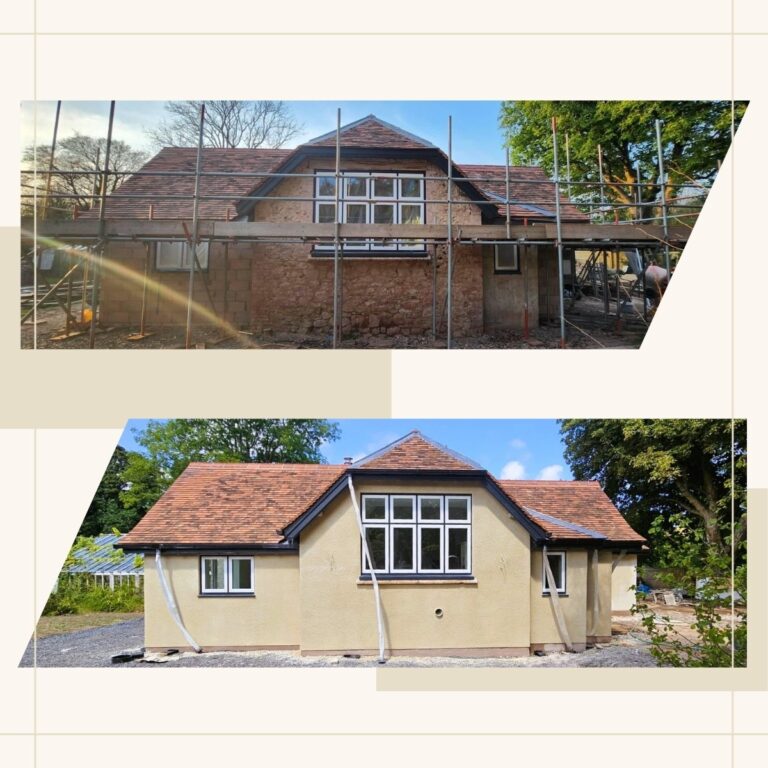
Lime Render Done Properly:
A Stone Cottage Retrofit That Actually Works
There’s a certain charm to an old stone cottage. Thick walls, bags of character… and, more often than not, a fair bit of damp.
This project is a full renovation and retrofit of one such cottage—and importantly, it’s been done the right way. No shortcuts, no inappropriate modern materials. Just breathable construction: lime plasters, high-performance aerogel-lime insulation, and a carefully considered lime render system.
Let’s talk about that render—because it’s doing far more than just looking pretty.
Respecting the Original — Without Repeating Its Problems
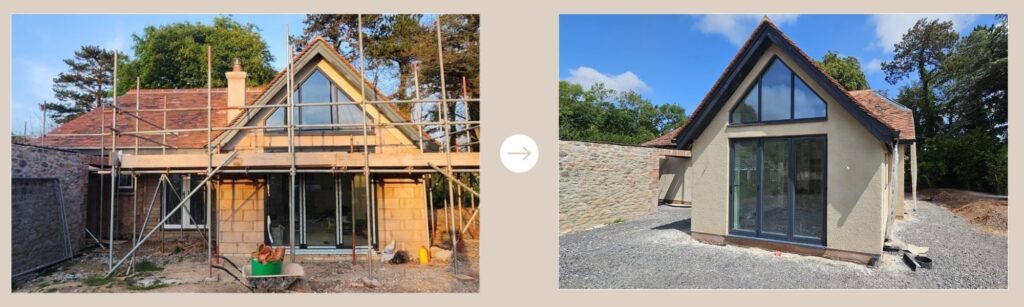
The cottage originally had a Tyrolean-style render, typical of the surrounding buildings. So visually, we needed to match that local character. But here’s the thing: traditional doesn’t mean copying blindly. Old buildings often developed problems for predictable reasons—mainly moisture. This property has no damp proof course, which means moisture from the ground can rise into the walls. Add wind-driven rain into the mix, and you’ve got a recipe for cold, damp masonry.
So the brief was simple (on paper at least): match the original look, but dramatically improve performance.
Step One: A Base Coat That Actually Protects the Building
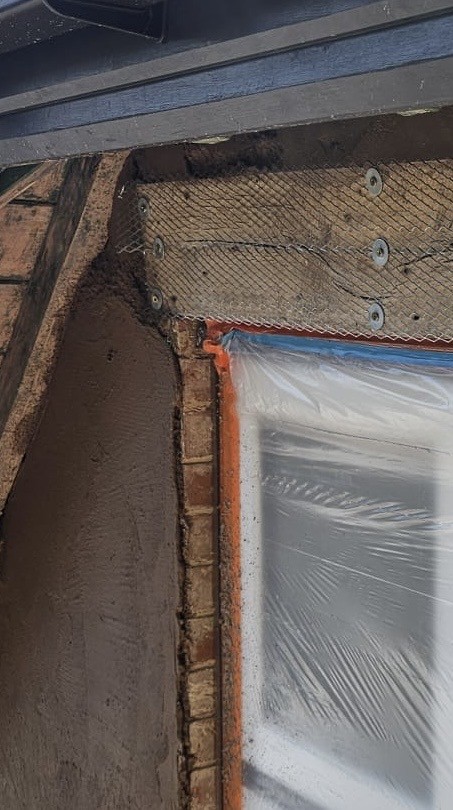
We started with a base coat: MGN Rinzaffo Roman Base.
Now, this isn’t just there to give the top coat something to stick to—it’s doing two critical jobs:
1. Managing rising damp
Without a damp proof course, moisture and salts can travel up through the masonry. Left unchecked, those salts will eventually deteriorate your render.
This lime base coat helps control moisture and salt movement, protecting the finish layer above.
2. Keeping rain out—but letting the building breathe
It prevents liquid water penetration, so driving rain doesn’t soak into the wall.
But crucially, it is vapour permeable, meaning moisture inside the wall can still escape. That’s the golden rule with old buildings:
Keep water out, but let vapour out.
Step Two: A Lime Top Coat
That Works as Hard as It Looks Good
On top of that, we’ve applied MGN Sanacolor 2000 External Lime Render.
At first glance, it’s just a beautiful, traditional finish. But there’s quite a lot going on under the surface.
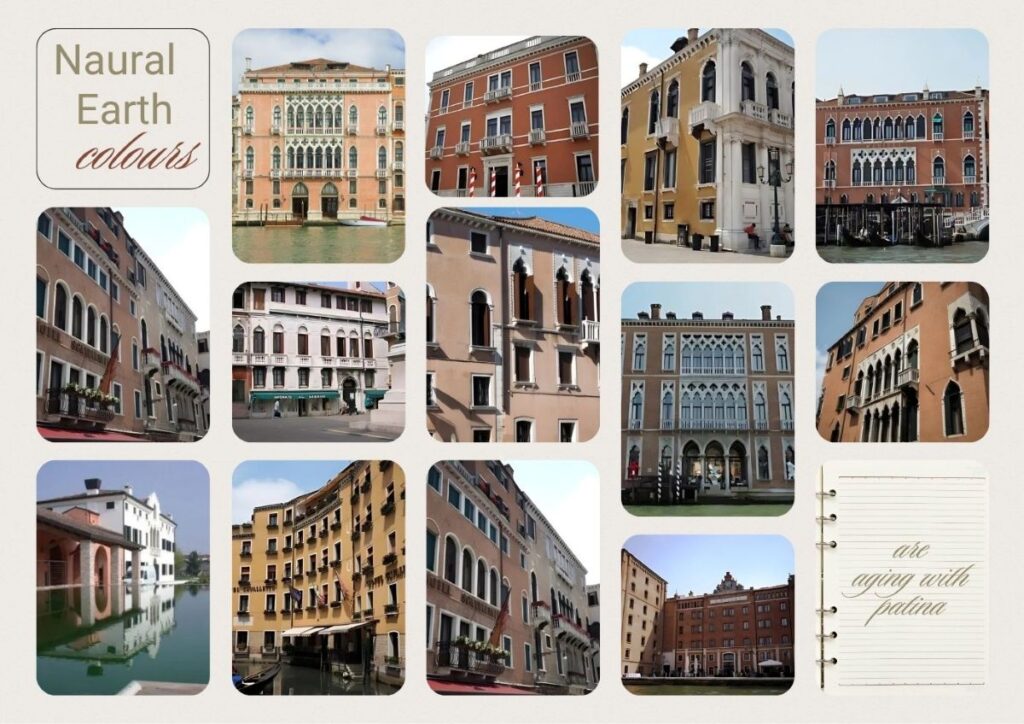
Coloured throughout – no painting required, ever
Matched to the original texture using a machine-applied Tyrolean finish
Enhanced with marble dust, which refines the pore structure and limits moisture penetration
Resistant to frost
Withstands wind-driven rain
Highly breathable, so it performs brilliantly in damp conditions
In short, it’s a lime render designed for real-world weather, not just textbook heritage projects.
And because the colour runs all the way through the material, you won’t be back in five years repainting it.
Click on the products for more information
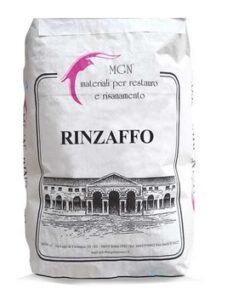
Rinzaffo MGN
The original Roman waterproofing mortar. Breathable, salt-resistant, and perfect high-humidity zones
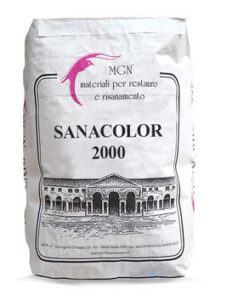
Sanacolor 2000 MGN
Water repellent lime render, in 24 colours. Resistant to frost, wind abrasion and sea spray.
The End Result: Traditional Looks, Modern Performance
What you see today is a faithful recreation of the original aesthetic — preserving the same character, texture, and warmth. Behind the finish, however, is a high-performance system using Rinzaffo MGN and Sanacolor 2000 MGN, designed and tested to withstand harsh environments and to keep the building dry for decades.
- No ongoing painting
- Minimal maintenance
- Strong resistance to weather
- A healthier, drier building overall
Why This System Works (When Others Don’t)
A lot of render failures on old buildings come down to one thing: using the wrong materials.
Cement renders trap moisture.
Traditional lime harlings and renders are inherently not waterproof.
Impermeable coatings push damp somewhere else.
This system avoids all of that by working with the building:
1.
Breathable where it needs to be
2.
Protective where it matters
3.
Flexible enough for old masonry
4.
Durable enough for the British climate
Tell us about your project!
Whether you’re restoring a cottage or planning a retrofit, getting the specification right early on makes all the difference. If you’re unsure what system suits your building—get in touch. It’s far easier to get it right now than to fix it later.